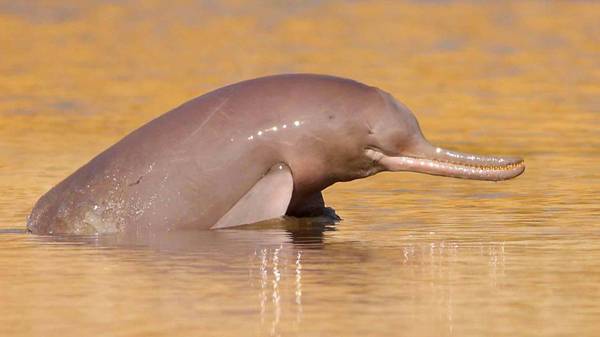



RAHIM YAR KHAN – In a significant environmental development, the presence of the world’s rarest freshwater mammal, the “Indus Blind Dolphin” (Platanista gangetica minor), has been confirmed at the Chachran Sharif section of the Indus River. The sighting marks a pivotal turnaround for a species that was, until recently, teetering on the brink of extinction. Assistant Chief Wildlife Rangers, Mujahid Kaleem, disclosed the details to the media on Sunday, noting that the resurgence is the direct result of stringent protection measures. Speaking to The Nation, Mr Kaleem highlighted that merely a few years ago, the dolphin population in the Indus River faced existential threats. The decline was so severe that it drew the alarm of various global environmental organisations, prompting immediate intervention by the state. Acting on directives from the Federal and Punjab governments, the Directorate General Wildlife and Parks Punjab launched emergency preservation protocols specifically targeting the riverine belts of Chachran Sharif and Taunsa Sharif. These measures combined rigorous law enforcement with a comprehensive public awareness campaign. “The results of these hardline policies and community engagement are finally becoming visible,” Mr Kaleem stated. “Just two days ago, we received confirmed reports of a pond of over 15 dolphins surfacing at Chachran Sharif. For Pakistan, and the global conservation community, this is profoundly welcome news.” To illustrate the severity of the department’s crackdown on poaching, the official cited a landmark case from May 2024. A First Information Report (FIR) was lodged at the Zahir Pir police station against an individual accused of hunting a dolphin. The case is currently under trial in court, sending a strong deterrent message to potential poachers in the region. Mr Kaleem also shed light on the unique biological and behavioral characteristics of the species. He clarified that the Indus Blind Dolphin is a mammal, not a fish; it gives birth to live young and nurses them. Evolutionarily adapted to the turbid waters of the Indus, these creatures are naturally blind and rely entirely on a sophisticated sonar system (echolocation) to navigate and hunt. Interestingly, the presence of the dolphins has inadvertently created a unique fishing phenomenon in the area. Mr Kaleem explained that when dolphins chase prey from the deep waters, fish often flee toward the riverbanks to hide among the stones. Local residents have learned to exploit this panic, catching the trapped fish with their bare hands—a method of fishing distinct to this region—rather than using nets or hooks. Concluding his briefing, the Assistant Chief expressed optimism for the future. He predicted that within the next year, the Indus River would once again become a thriving habitat for these mammals. Such a recovery, he noted, would significantly bolster Pakistan’s “soft image” on the international stage, highlighting the country’s commitment to biodiversity and wildlife preservation.
Over 15 Indus blind dolphins sighted near Chachran Sharif
BY Pretty Lady
- December 9, 2025
- 0 Comments